
 PÉTALE
 EAU
EAU
 FRAIS
FRAIS
 TERRE
TERRE
 OOLONG
 ANJOU
ANJOU
 SUN
SUN
 MANDARIN
 ORE
ORE
 FIG
FIG
 DÉPROGRAMMÉ
 Ce que nous croyons
 Ingrédients Étoile
 Spa et commerce de détail
 Revue
Revue
 QUIZ
QUIZ

A considered guide to choosing an after-sun lotion you will actually reach for, with an honest read of ingredients, texture, and the small things that change how skin feels by morning.
The best after-sun lotion is the one your skin can settle into. It gives back the water that sun and heat have pulled away. It supports the skin barrier as it returns to itself. And it leaves out the alcohols, heavy fragrances, and mineral oils that would compound the dryness underneath. The right formula combines humectants to draw moisture in, emollients and barrier lipids to hold it there, and gentle calming ingredients like panthenol, niacinamide, and probiotic peptides. It also has to feel good on warm skin, because the lotion you'll keep reaching for is the one that's pleasant in the moment.
Of every step in a post-sun routine, the lotion is the one doing the most work. It's the layer you'll apply more often than any other, and the place where formulation quality has the largest payoff over the next two or three days. Getting this one right is more meaningful than any other choice in the category, and the gap between a thoughtful lotion and a commodity one is bigger than people expect.
This is a category-level look at how to choose. It covers what makes an after-sun lotion different from a daily one, the ingredients that earn their place in a formula, the ones that don't, and how to match a lotion to your skin type, your tone, and the kind of sun your week tends to hold. Where the conversation gets specific to Zents, it's because the brand built its lotion around the same principles you'll find below, and that overlap is worth being honest about.
What makes an after-sun lotion different from your daily one
On a formula level, the categories overlap. Both contain water, humectants, emollients, and a preservation system. What changes is the proportion of each, the specific ingredients chosen within each category, and what's deliberately left out. An after-sun lotion leans heavier on barrier-repair ingredients and calming actives, lighter on the fragrance and dye loads that often appear in commodity body lotions to make them feel fancier on the shelf.
There's a quieter difference too, in how a lotion behaves on warm skin. A daily formula is tuned for neutral, room-temperature skin. Apply that same lotion to a torso that's still warm from the day, and the texture can turn sticky, the scent gets louder than it should, and any borderline-irritating ingredient becomes noticeable in a way it wouldn't otherwise. After-sun lotions are tuned for the kind of skin they're meant to meet. Warm. Thirsty. Asking for cushion.
Why texture matters more than people expect
If you've spent any time on the after-sun shelf, you've noticed the category skews toward heavier, cushioned textures. Dense lotions. Slow-absorbing creams. This isn't an accident. Skin that has lost meaningful moisture benefits from a slightly occlusive layer that slows further evaporation. Light, fast-absorbing gels feel pleasant for thirty seconds but don't deliver the same level of barrier support over time.
That said, there's a comfort floor. If a lotion feels heavy or suffocating, you won't reach for it three or four times in a day. The best after-sun lotion is rich enough to do the work, but cushioned and absorbable enough that you'll actually keep applying it.
The ingredients that earn their place in an after-sun formula
After-sun lotion ingredients fall into four soft categories. A considered formula has members of all four. Recognizing what each one does on a label is the most useful skill you can develop for choosing well among the many options on the shelf.
Humectants, the water-pullers
Humectants attract water from the air and from the deeper layers of skin, holding it at the surface where it's needed. The reliable ones to look for are glycerin, hyaluronic acid (sodium hyaluronate on labels), and panthenol, which is provitamin B5. Glycerin is the inexpensive workhorse of the category, and it earns the role. Hyaluronic acid holds many times its weight in water. Panthenol is the quiet favorite because it pulls double duty as both a humectant and a gentle calming agent.
Emollients and barrier lipids, the water-keepers
Emollients smooth the surface of skin and fill the small gaps in the barrier. Barrier lipids go further, helping rebuild the lipid matrix that holds the outer layer of skin together. Look for shea butter (Butyrospermum parkii), jojoba (Simmondsia chinensis), squalane, sunflower seed oil, and fatty alcohols like cetyl alcohol and stearyl alcohol. Those last two aren't the drying kind of alcohol. They're waxy emollients that cushion the texture and help everything else absorb evenly.
Ceramides are the specific lipids that make up the mortar between cells in the skin barrier. A lotion that lists ceramide NP, ceramide AP, or ceramide EOP is delivering the exact molecules skin uses to rebuild. Cholesterol and fatty acids often appear alongside ceramides in well-built formulations, completing the small set of ingredients the skin barrier asks for.
Calming ingredients, the gentling work
This is the category where after-sun lotions earn their distinction from daily ones. The standouts are niacinamide (vitamin B3), allantoin, bisabolol (the calming molecule from chamomile), centella asiatica (sometimes called gotu kola or cica), and aloe barbadensis leaf juice. Niacinamide is the workhorse here. It quiets warmth, supports the barrier, and helps moderate the soft inflammation that follows sun exposure.
Aloe shows up on many ingredient lists. The catch is concentration. If aloe is the second ingredient on a label, right after water, the formula is delivering a meaningful dose. If aloe is near the bottom of the list, it's mostly there for the marketing.
Probiotic peptides and microbiome support
This is the newest category in skin science, and the one growing fastest. Probiotic peptides are short chains of amino acids derived from beneficial bacteria. They support the skin's microbiome, the small community of microorganisms that lives on healthy skin and contributes to its overall balance. Peer-reviewed research suggests they measurably improve barrier function over time and help skin maintain its diversity of helpful flora. For an after-sun product, this matters because sun exposure disturbs the microbiome along with everything else.
What to leave out of an after-sun lotion
The exclusion list matters as much as the inclusion list. The ingredients below aren't all categorically wrong in skincare. They're just the wrong choice in a product you're applying to recently sun-exposed skin.
- Denatured alcohol (alcohol denat., SD alcohol, ethanol). The cool sensation it gives is the alcohol evaporating off skin, which is the opposite of what thirsty skin needs. It also dries skin further and loosens the barrier. Avoid in any post-sun product.
- Heavy synthetic fragrance loads. Warm skin is more reactive to fragrance than baseline skin. This doesn't mean all scented products are off-limits, but the scent should be light, well-formulated, and ideally drawn from clean aromatic ingredients rather than synthetic blends turned up to compensate for thin formulas.
- Strong essential oils on warm or broken skin. Citrus oils especially (bergamot, lemon, lime) can cause patchy hyperpigmentation if applied before another round of sun. Even non-citrus oils like peppermint or eucalyptus can sting on warm skin, even though the initial impression is cool.
- Mineral oil and petrolatum when they dominate the formula. Both ingredients are inert and safe, but they only seal. They don't give anything back. A lotion built around mineral oil holds water in but contributes nothing to the recovery itself.
- Retinoids and exfoliating acids. Retinol, tretinoin, glycolic acid, lactic acid, salicylic acid. All of these speed up cell turnover and increase how permeable the barrier is. Pause them for 48 to 72 hours after a day in the sun.
- Menthol, camphor, capsaicin. All offer a cool or tingling sensation by triggering nerve receptors rather than actually changing the temperature. On warm skin, they can sting or make the warmth feel sharper, even though the first impression is cool.
- Synthetic dyes (anything starting with FD&C or D&C followed by a color name). Aesthetic-only, with occasional allergic potential for nothing in return.
How to apply after-sun lotion so it actually works
Application makes more difference than people expect. The same lotion will deliver a noticeably different result depending on when and how you put it on.
- Cleanse first, gently. A low-foaming, alcohol-free wash. Pat almost dry with a soft towel, leaving skin slightly damp.
- Apply within five minutes of toweling off. This is the single most important variable. Damp skin gives the humectants in the lotion something to bind to, drawing moisture inward rather than letting it evaporate.
- Use more than you usually would. Most people apply about half the lotion their skin asks for after a day in the sun. A generous palmful for arms, another for chest and torso, another for each leg, is the right amount for an average-sized adult after a full sun day.
- Press in rather than rub. Warm skin is mildly inflamed and more sensitive to friction. Apply with flat palms in long, soft motions rather than the brisk rubbing you'd use on neutral skin.
- Reapply two or three times across 48 hours. The first two days are the window where skin is actively returning to itself. Morning, midday if possible, again before bed.
- Layer body oil over the top, if your skin asks for it. A finishing layer of oil over the lotion seals everything in. This pairing is the gold-standard for post-sun layering.
The lotion-plus-oil pairing is consistently the most effective combination for the post-sun window. Lotion delivers the water. Oil holds it there. For the deeper guide to body oil in this context, see After-Sun Body Oil: When, Why, and How to Use One.
The best after-sun lotion for sensitive or reactive skin
Sensitive skin types feel the after-sun moment in two specific ways. The barrier is a little more permeable at baseline, which means it loses moisture faster under sun and heat. And the surface response tends to be more pronounced, showing up as itching, redness, or a soft sun rash in the hours that follow.
The single most important variable for sensitive skin is fragrance. Even a well-tolerated scent can become uncomfortable on warm skin. The fragrance-free imperative here is real, which is why Zents formulates the entire Unzented collection for sensitive and reactive skin. The Unzented Age Defying Probiotic Lotion delivers all of the same probiotic peptides, barrier lipids, and humectants as the scented versions, with no added fragrance.
Beyond going fragrance-free, look for centella asiatica, bisabolol, allantoin, and panthenol on the ingredient list. These four together have a quiet, reliable calming track record and rarely cause sensitivity. Avoid essential oils entirely on sensitive skin, even ones marketed as gentle.
After-sun lotion for deeper skin tones
There's a long-standing idea that darker skin doesn't need after-sun care because it doesn't burn as easily. The visible response is indeed softer in deeper tones, but the underlying moisture loss and barrier shift still happen. The signals just look different on the surface.
The bigger consideration for deeper skin is post-inflammatory hyperpigmentation. When the soft inflammation that follows sun exposure doesn't resolve cleanly, melanin production picks up in the affected area, leaving uneven dark patches that can take months to fade. DermNet NZ covers the mechanism in detail. This makes consistent, gentling after-sun care arguably more important for deeper skin, not less.
Niacinamide is the ingredient that earns the most attention for this skin type in the post-sun context. It addresses both the soft inflammation directly (helping prevent hyperpigmentation from settling in) and supports the eventual fading of any pigmentation that does develop. A lotion with niacinamide alongside barrier lipids and probiotic support is well-suited to daily use across summer.
After-sun lotion for mature and perimenopausal skin
Mature skin, and particularly skin moving through perimenopause, is drier at baseline. The natural oils that maintain the lipid layer slow down. The barrier becomes thinner. Water leaves the surface a little faster than it once did. After a sunny day, the dehydration feels more pronounced, and the return takes a little longer.
The right after-sun lotion for this skin runs richer in barrier lipids and emollients. Look for shea butter, ceramides, squalane, and panthenol high on the ingredient list. Texture should be more cushioned than your standard daily formula. Layering oil over lotion isn't optional on heavy exposure days. It's the gentleness this skin asks for.
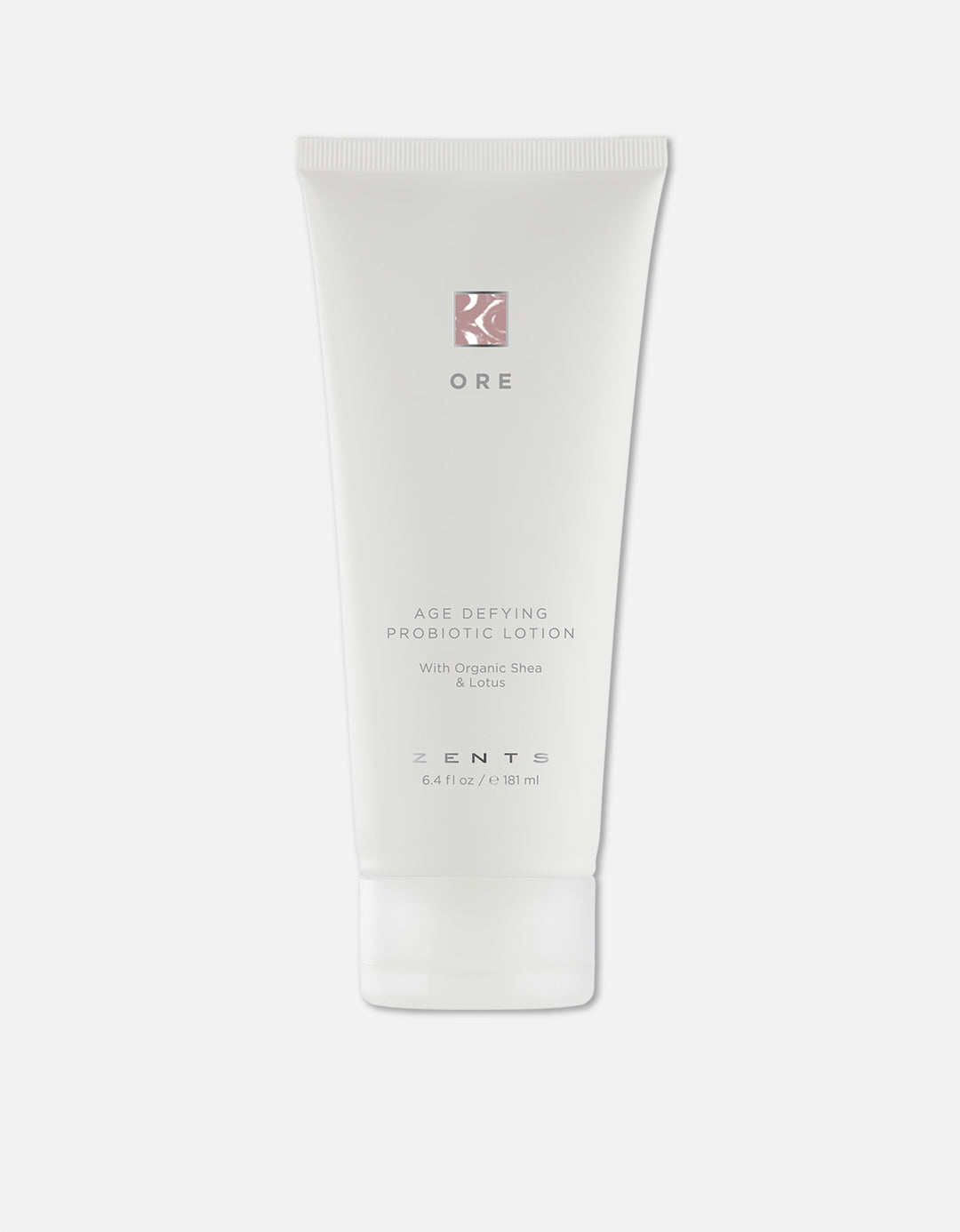
The Age Defying Probiotic Lotion was formulated with mature skin in mind, which is why it carries the Age Defying name. The probiotic peptides support the barrier, the shea butter and organic plant lipids cushion the texture, and the formula layers comfortably under a body oil for the deeper-care moments.
Drugstore, clean luxury, and after-sun-specific: how the category sorts out
The after-sun shelf at any drugstore holds products from a handful of distinct tiers. Each one has honest strengths and honest trade-offs.
| Catégorie | Common strengths | Common trade-offs |
|---|---|---|
| Drugstore after-sun gels | Inexpensive, easy to find, light texture, cool feeling | Heavy on denatured alcohol, fragrance, and synthetic dye; minimal actual repair ingredients |
| Drugstore moisturizing lotions | Inexpensive, decent occlusive layer, available everywhere | Heavy on mineral oil and petrolatum; light on calming actives; often heavily fragranced |
| Dermatology brands | Solid ingredient lists, fragrance-free options, clinically tested | Often clinical-feeling packaging, sometimes textures that feel sterile rather than comforting |
| Clean luxury bodycare | Considered ingredients, refined textures, multi-use formulas, thoughtful scent quality | Higher price; smaller distribution; you still need to read the formula (not all clean brands are well-formulated) |
| After-sun-specific brands | Marketed for the use case; sometimes include specialized actives | Wide quality range; some are mostly aloe-and-fragrance positioned as recovery |
Across all of these, the way to evaluate a product is the same: read the ingredient list. A clean luxury product with weak ingredients is no better than a drugstore version. A drugstore product with the right barrier lipids and a fragrance-free formula can punch above its category. The marketing language about 'after-sun' or 'soothing' is unregulated and worth ignoring. The formula is the signal.
Where the Zents Age Defying Probiotic Lotion fits in
The Age Defying Probiotic Lotion wasn't designed exclusively as an after-sun product. It's a daily lotion built around three principles: probiotic peptide support for the skin microbiome, organic plant-based emollients including shea butter and lotus, and a clean, fragrance-considered formulation across eleven scent options. Those same principles happen to be what after-sun recovery asks for, which is why the lotion has been quietly adopted by Zents customers for the post-sun window for years.
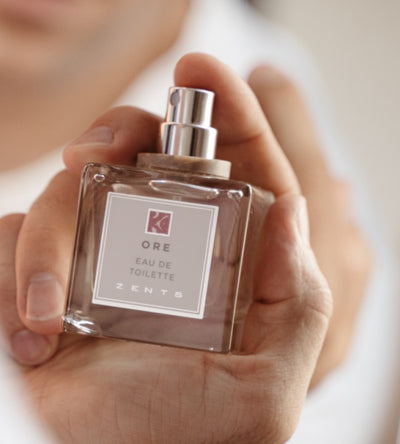
Among the eleven scents, a few read most naturally as summer companions. Sun (Cordwood pine, mandarin, vanilla), the seasonal anchor of the Sun scent collection. Water, a Mediterranean cool blue note. Mandarin, bright and hydrating with a warm finish. The scents are formulated with the same considered approach as the rest of the line, and the fragrance level is calibrated to feel grounded rather than perfumed.
For anyone who prefers no scent at all, the Unzented Age Defying Probiotic Lotion delivers the identical formula without added fragrance. This is the right choice for sensitive skin, post-sunburn application, and any moment where you want the recovery benefits without any aromatic profile at all.
The lotion pairs beautifully with the matching body oil and Concreta balm in the same scent family for those who want a layered ritual, or stands alone for a single-step application. Apply to damp skin within minutes of toweling off, use a generous palmful per body zone, and reapply two or three times across the next 48 hours of post-sun recovery.
Frequently Asked Questions
Can I use after-sun lotion every day, or only after sun exposure?
Daily use is fine. The same ingredients that make a lotion suited to post-sun recovery (humectants, barrier lipids, calming actives, probiotic support) are also valuable for daily care. Many people find that switching to a richer after-sun-style lotion as their daily product through summer keeps skin in better shape overall. The Age Defying Probiotic Lotion was formulated to bridge both uses comfortably.
How is after-sun lotion different from a sunburn relief lotion?
After-sun lotion is gentle, preventive care for any sun-exposed skin, including skin that hasn't visibly burned. A sunburn relief product is usually formulated more conservatively, often without fragrance, with higher concentrations of calming actives like aloe and bisabolol. For an actual sunburn, follow the How to Recover from a Sunburn: A Skin-First Recovery Plan plan rather than relying on a general after-sun lotion alone.
Can I apply after-sun lotion to my face?
Generally yes, though the formula may be heavier than what your face is used to. If your face spent the day in the sun too, look for a dedicated facial post-sun product or use your usual moisturizer with extra care. Note that Zents is a bodycare brand and doesn't make facial skincare; for face-specific guidance, look to a brand that specializes there. On the body, after-sun lotion is comfortable for arms, legs, chest, back, and the décolletage.
Should I apply to wet skin or dry skin?
Slightly damp skin is what skin asks for here. After your post-sun shower, pat down with a towel but leave a thin film of moisture, then apply the lotion. The water on your skin gives the humectants something to bind to, which noticeably increases how much moisture actually penetrates rather than evaporating away.
Can I layer after-sun lotion under other products?
Yes. The standard evening layering is gentle cleanser, lotion to damp skin, body oil sealed on top, then a touch of balm on any high-need zones like shins or shoulders. The Luminous Cashmere Body Oil layers over the lotion without interfering with its absorption, and the Concreta Reparative Balm can be tapped over both on the small spots that ask for more. For the complete lineup overview, see After-Sun Sprays, Butters and Balms: Which Format Is Worth It.
How long does a bottle typically last during heavy summer use?
During post-sun season use, you'll go through lotion faster than during normal daily care. A standard 6.4 fl oz bottle, applied two or three times a day across the body, lasts about two to three weeks of active summer use. Plan accordingly for trips, and consider keeping a backup if you're committed to consistent reapplication. Many customers keep one in the bathroom, one in the beach bag, and one in the kitchen for hand and arm touch-ups through the day.
The right after-sun lotion is the one you'll actually reach for, three times a day, for three days running. Ingredients matter, texture matters, and the way a formula meets warm skin matters most of all. Choose the one your skin can settle into, and the rest of summer's recovery takes care of itself.