
 PETAL
PETAL
 WATER
WATER
 FRESH
FRESH
 EARTH
EARTH
 OOLONG
 ANJOU
ANJOU
 SUN
SUN
 MANDARIN
 ORE
ORE
 FIG
FIG
 UNZENTED
 What we Believe
 Star Ingredients
 Spa & Retail
 Journal
 QUIZ
QUIZ

A closer look The word "probiotic" is on the front of our lotion. The science behind it lives in a small aquatic plant called water plantain, and in a set of studies that measured what its peptides do to skin under stress.
If you have read our approach to probiotics for skin health, you already know the big idea: healthy skin depends on a balanced surface ecosystem, and our formulas support that balance with plant-derived actives rather than live cultures. This article goes one layer deeper. It walks through the ingredient itself, the two barriers it works on, and the numbers from the laboratory and clinical studies behind it.
We will keep the language plain. But we will not skip the data, because the data is the reason the ingredient is in the bottle.

Your Skin Runs Two Barriers at Once
Most of us picture the skin barrier as a single wall. It is closer to two systems working in parallel. The first is mechanical. The upper layers of the epidermis are held together by a network of "tight junctions," protein seals that decide how much water leaves and how much of the outside world gets in. The second is biological. Skin cells carry receptors that recognize microbes and respond by producing their own antimicrobial molecules. One barrier keeps moisture in. The other keeps the peace with everything living on the surface.
Both barriers get tested every day. Hot water, detergents, and surfactants loosen the tight junctions. Shifts in the surface microbiome put the biological barrier on alert. When either one falls behind, the result is familiar: skin that feels tight, looks dull, loses water faster than it should, and reacts to things it used to tolerate.
A good barrier ingredient, then, has two jobs. It should help the mechanical seal rebuild, and it should help the biological defenses respond without tipping over into irritation. That is the standard we hold the probiotic active in our lotion to.
What "Probiotic" Means When There Are No Bacteria in the Bottle
A true probiotic is a living microorganism. Living cultures do not survive well in a water-based lotion that needs to stay stable on a shelf and safe on your skin. So when a body lotion calls itself probiotic, it is usually describing what the formula does rather than what it contains: it helps the skin's own defense system behave the way a healthy, balanced microbiome would encourage it to.
That is exactly how the active in our Age Defying Probiotic Lotion works. It contains no bacteria, live or otherwise. It contains purified peptides from a plant, and those peptides signal the skin through the same receptors that friendly skin bacteria use. The ingredient supplier describes it as acting "by a mechanism similar to that of a probiotic, without causing inflammation." That last clause matters, and we will come back to it.
Meet Water Plantain
On our ingredient list it appears as Alisma plantago-aquatica extract, certified organic. Its common name is water plantain, a broad-leaved plant that grows at the edges of ponds and slow streams across Europe, Asia, and North America. A plant that spends its life half-submerged has to manage water and microbes constantly, which is part of why its peptides turned out to be interesting for skin.
The specific extract we use is a patented active developed by SILAB, a French biotechnology company that specializes in purified plant compounds for skincare. SILAB's laboratory and clinical work is the source of every figure in this article. Their studies tested the active on its own, at concentrations between 0.25% and 3%, both on cultured human skin cells and on volunteers.
+139%
Tight junction protein
ZO-1 synthesis in skin cells stressed with a detergent, treated with 0.5% active
+48%
Innate immune receptor
TLR2 expression in skin cells treated with 1% active
−33%
Inflammatory signal
Interleukin-8 released after microbial stress, with 1% active
−14.4%
Water loss through skin
TEWL versus placebo after 14 days of twice-daily 3% active on stressed skin
Source: SILAB in-vitro and in-vivo studies of the INDUFENCE active. Figures describe the ingredient, not the finished lotion.
Rebuilding the Seal: Tight Junctions
Start with the mechanical barrier. Tight junctions are built from several proteins, and one of the major ones is called ZO-1. When researchers exposed human keratinocytes, the main cells of the outer skin, to sodium lauryl sulfate (a common harsh surfactant), ZO-1 synthesis dropped by 44%. The seals between cells visibly broke down. The same thing happened when the cells were exposed to a fragment of Staphylococcus aureus, a bacterium that tends to overgrow on compromised skin.
Adding the Alisma peptides reversed the damage. At 0.25%, ZO-1 synthesis climbed 84% above the stressed baseline. At 0.5%, it climbed 139%, and the tight junction network re-formed. In practical terms, the ingredient helped stressed skin cells put their seals back together, whether the stress came from a chemical or from a microbe.
This is the part of the story that connects to how your skin feels after a shower. Surfactants are unavoidable; even gentle cleansers loosen the seal a little. An active that helps close it again is a meaningful thing to apply right afterward, which is why we suggest lotion on damp skin.

Teaching Skin to Defend Itself, Calmly
Now the biological barrier. Skin cells carry a family of sensors called Toll-like receptors. One of them, TLR2, is central to innate immunity: it recognizes the surface of bacteria and, when triggered, tells the cell to produce its own antimicrobial peptides, including one called human beta-defensin 2 (hBD2). This is the mechanism a healthy microbiome uses to keep skin resilient. Friendly bacteria such as Staphylococcus epidermidis gently stimulate TLR2, and skin stays ready without being inflamed.
Here is where the "probiotic-like" description earns its keep. In SILAB's study, cells treated with 1% of the Alisma active showed TLR2 expression 48% higher than untreated cells. For comparison, cells exposed to S. epidermidis itself, the friendly resident, showed a 16% increase. The plant peptides nudged the same pathway a beneficial bacterium would, and did it more strongly.
The obvious worry with anything that stimulates immune receptors is irritation. So the researchers also measured interleukin-8, a signaling molecule the skin releases when it is inflamed, after exposing cells to the S. aureus fragment. With 1% active present, IL-8 production fell by 33%. Put those two results side by side and you get the full picture: the ingredient turns up the skin's readiness to defend itself and turns down the inflammatory noise that usually comes with a threat. Readiness without reactivity.
The cell studies above are in vitro, meaning they were run on cultured human skin cells rather than on people. They are the right way to see a mechanism clearly, and they are not the same as a result on your arm. The studies in the next section were run on volunteers, which is where the mechanism gets its real-world test.
All of the figures describe the active ingredient at the concentrations SILAB tested. They are not measurements of the finished Zents lotion, which combines the active with hyaluronic acid, squalane, organic shea butter, and a long list of botanicals that were not part of these studies.
What Happened on Real Skin
The clinical study followed 21 healthy women, average age 34, whose forearm skin was repeatedly stressed with the same detergent used in the cell study. They applied a 3% active emulsion to one arm and a placebo to the other, twice a day, and researchers measured transepidermal water loss (TEWL), the standard way to gauge how well the barrier is holding moisture. Lower is better.
After 7 days, water loss on the treated side was 12.3% lower than on the placebo side. After 14 days it was 14.4% lower, a difference the researchers reported as statistically significant (P = 0.0003), and three quarters of the volunteers showed the effect.
Then came the part we find most interesting. The volunteers stopped applying anything, and a week later the researchers measured again. The treated skin was still holding water 9.9% better than the placebo side. The barrier improvement outlasted the product. Skin that has been helped to rebuild its seal keeps some of that structure for a while, which is the difference between an ingredient that coats and an ingredient that conditions.
A separate 28-day study asked 18 women, average age 38, to rate their own skin after using the 3% emulsion twice daily against a placebo. The majority reported a general improvement in skin quality. Specifically, they noticed more refined texture (the strongest result, P = 0.0451), smoother skin, and a more even complexion. Those are the three qualities we describe on the lotion itself: refined, smooth, and even.
How It Shows Up in the Lotion
Look at the ingredient list on any Age Defying Probiotic Lotion and you will find Alisma plantago-aquatica extract in the eighth position, ahead of shea butter, squalane, and sodium hyaluronate. Ingredient lists run from highest concentration to lowest, so that placement tells you the active is present in a meaningful amount.
It is not working alone. Sodium hyaluronate draws water into the upper layers. Squalane, safflower seed oil, and organic shea butter replenish the lipids that sit between skin cells, the mortar around the bricks. Organic aloe leaf juice soothes. The Alisma peptides handle the structural and immune side of the barrier while the rest of the formula handles hydration and lipid replacement. Each piece covers something the others cannot.
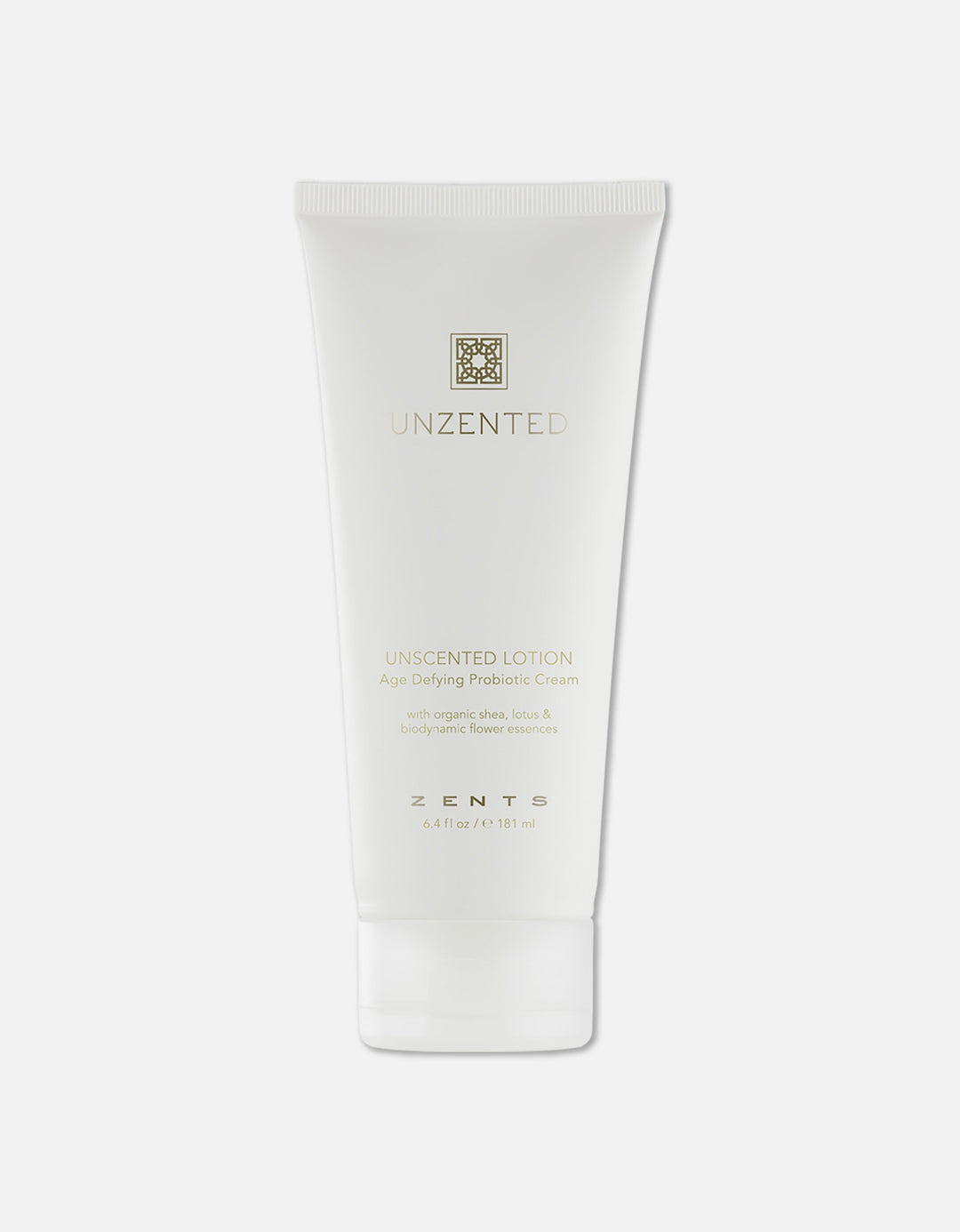
The same base formula is available in every Zents scent, and in our fragrance-free Unzented version for skin that reacts to scent. If your barrier is already compromised, Unzented is where we would start.
The probiotic active
Age Defying Probiotic Lotion
Fragrance-free
Unzented Probiotic Lotion
Seal the driest spots
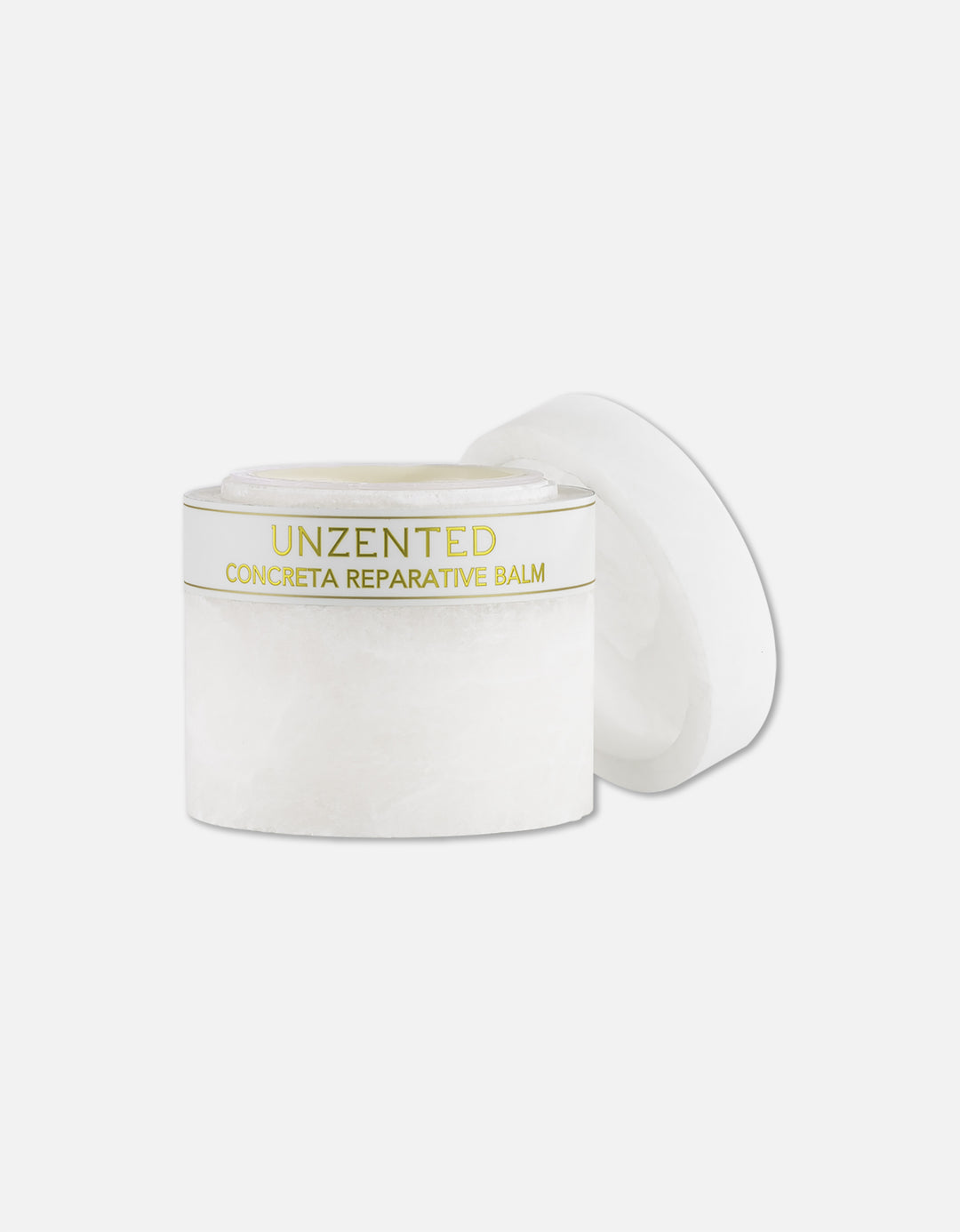
Concreta Reparative Balm
A Barrier-First Ritual
The studies point to a few simple habits. First, consistency. Every clinical result above came from twice daily use, and the barrier improvement built over two weeks rather than appearing overnight. Morning and evening, after washing, is the rhythm the data supports. Ideally, we recommend usage over 30 days when starting for best results. We think of our Probiotic Lotion as a supplement — you need to give it the proper time to make an impact!
Second, timing. Apply lotion within a few minutes of stepping out of the shower, while skin is still slightly damp. You are catching the tight junctions at the moment they have been loosened by water and cleanser, and you are trapping surface moisture before it evaporates.
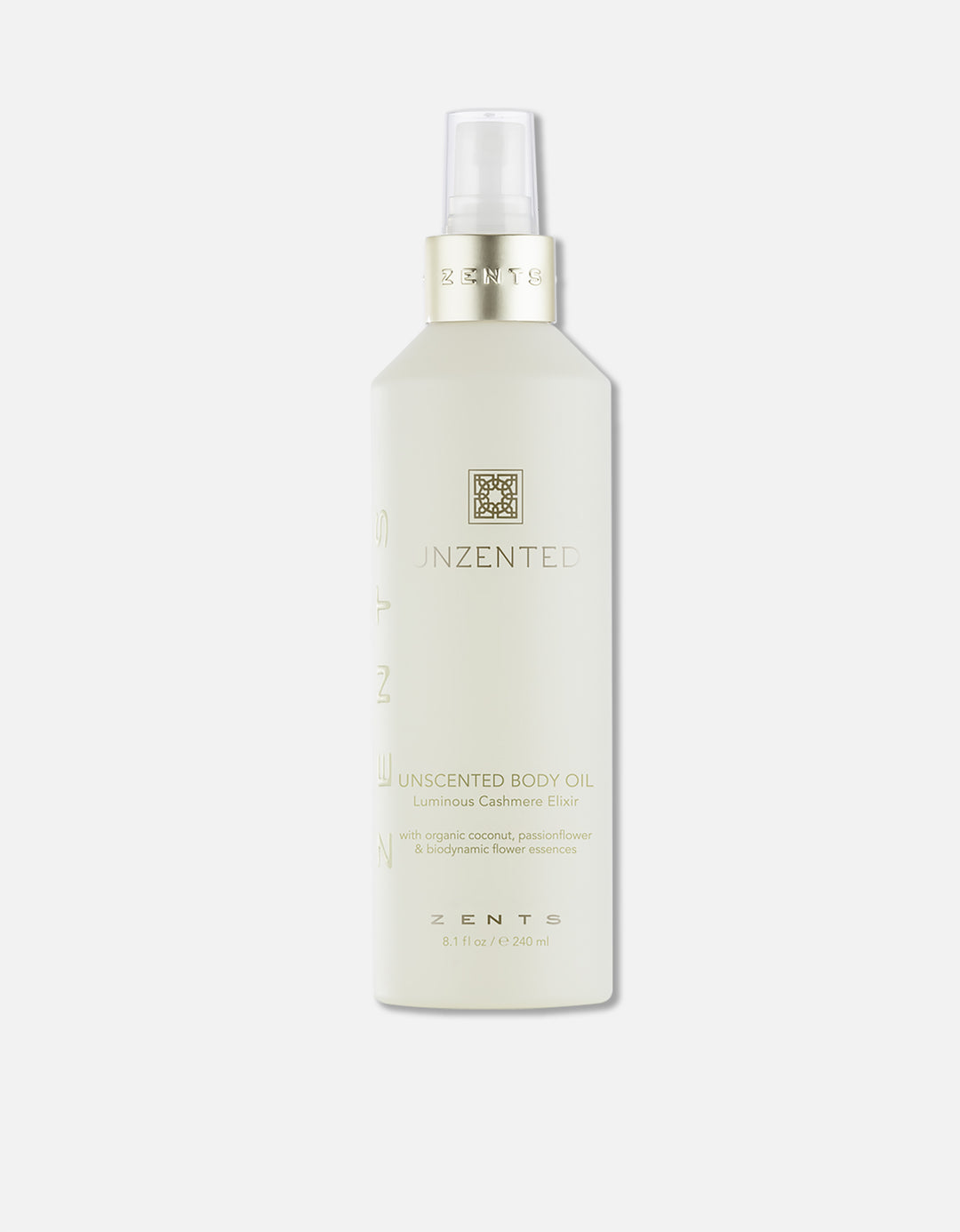
Third, layer by need. Our Lotion is the daily base for the whole body. For hands, heels, elbows, and anywhere the barrier has visibly cracked, follow with Concreta Reparative Balm to seal the surface. On drier days, mix in Cashmere Body Oil with your Lotion and apply. This will help lock in hydration and prevent water evaporation. And on the days you skip, the persistent-effect study suggests your skin will forgive you, at least for a little while.
What the Research Suggests Doing
- Apply twice a day, morning and evening, for at least two weeks before judging results
- Put it on right after cleansing, while skin is still damp, when the barrier has been loosened
- Use a gentle, low-surfactant wash so you are stressing the barrier less to begin with
- Choose the fragrance-free Unzented version if your skin is currently reactive or compromised
- Follow with a balm on hands, heels, and elbows, where water loss runs highest
Questions We Hear Often
Does the probiotic lotion contain live bacteria?
No. The probiotic action comes from purified peptides of water plantain (Alisma plantago-aquatica), a plant extract that signals the skin through the same immune receptors friendly bacteria use. There are no live or inactivated cultures in the formula. This means it doesn't need to stay in the fridge!
How long does it take to see a difference?
In the clinical study of the active, water loss through the skin was measurably lower after 7 days of twice-daily use and lower still at 14 days. Volunteers rating their own skin reported changes in texture and evenness after 28 days. Plan on a 14-30 days of consistent use for results.
Is it safe for sensitive or reactive skin?
The active was developed specifically to support skin defenses without triggering inflammation, and the studies showed it reduced an inflammatory marker rather than raising it. If your skin reacts to fragrance, you are undergoing health challenges, or you are pregnant or recently postpartum, choose the Unzented version, which carries the same active with no added scent.
Can I use it on my face?
The lotion is formulated for hands and body. For your face, we recommend the fragrance-free Unzented version only, since scented body products are more likely to sensitize facial skin over time.
Were these studies done on the Zents lotion itself?
No. They were conducted by the ingredient's developer, SILAB, on the purified active at concentrations between 0.25% and 3%, on cultured skin cells and on volunteers. They tell you what the ingredient does; the finished lotion combines it with hyaluronic acid, squalane, shea butter, and other botanicals for deeper skin health.
Skin does its best work when it is left with enough structure to protect itself. The peptides in water plantain help it rebuild that structure and respond to the world calmly. Everything else in the bottle is there to make the ritual of applying it feel like something you want to return to, morning and night.