 PETAL
PETAL
 WATER
WATER
 FRESH
FRESH
 EARTH
EARTH
 OOLONG
 ANJOU
ANJOU
 SUN
SUN
 MANDARIN
 ORE
ORE
 FIG
FIG
 UNZENTED
 What we Believe
 Star Ingredients
 Spa & Retail
 Journal
 QUIZ
QUIZ

A gentle, foundational guide to the small daily ritual that meets your skin in the hours after time in the sun, and why a thoughtful routine here changes how summer feels on your body.
After-sun care is the small daily ritual that meets your skin in the hours after time outside. It replenishes the moisture that sun and heat have quietly pulled away, and supports the skin barrier as it settles back into itself. The first four hours after sun exposure matter most, but the gentlest version of this routine, applied with a little more care than usual for two or three days, is what keeps summer skin soft, supple, and glowing.
Most of us think about sun protection during the day and stop there. But skin keeps responding to warmth and light for hours after you've come inside, sometimes well into the next morning. It feels tight at bedtime. Looks a little flushed. Asks for more than your usual lotion can give it. That window, soft and easy to miss, is where after-sun care belongs.
This guide is the place we begin. It walks through what after-sun care actually is and where it differs from your daily routine, why the first hours after the sun matter, what a complete ritual looks like across body and hair, and the small habits that change how your skin feels the next morning.
What after-sun care really is
After-sun care is the way we help skin settle after time outside. It isn't sunscreen, which works ahead of the sun by keeping UV from reaching your skin in the first place. It isn't your daily body lotion, which keeps things comfortable in the normal rhythm of a day. After-sun care is the bridge between them. The small ritual we reach for in the hours after coming inside, when skin asks for more moisture, more calm, and a softer kind of attention than usual.
A considered after-sun product does three things at once. It gives water back to skin that lost it under heat and light. It includes ingredients that quiet the surface warmth and gentle the feeling of tightness. And it leaves out what would compound the dryness, the alcohols, the heavy synthetic fragrances, the mineral oils that sit on the surface without giving anything back.
Where after-sun care sits among sunscreen, daily lotion, and recovery products
Sunscreen comes before. Daily lotion comes in the everyday. After-sun care comes after. The three are companions, not replacements for one another. You can lean on a rich daily lotion in a pinch after a sunny day, and many people do. But a lotion built for the post-sun window has more of what skin asks for in that moment, the barrier-supportive lipids, the calming ingredients, the cushioned texture that warm skin specifically responds to. Skin notices the difference by the next morning.
Why your skin needs more than your daily lotion after sun exposure
Sun exposure does several things to your skin at the same time. Most of them are quiet. UV light triggers a soft inflammatory response in skin cells, the warmth and flush you feel by evening. It loosens some of the lipid matrix that holds the skin barrier together. And it accelerates the moisture loss that's already happening as heat pulls water from the surface, faster than skin can usually replenish.
What's happening under the surface, in plain words
Your skin barrier is built to hold water. The outer layer is a careful arrangement of cells and lipids that locks moisture in, keeps irritants out, and quietly maintains the comfort you don't usually notice. After a day in the sun, that arrangement loosens. Moisture moves out faster than usual. The skin's calming systems light up. This is why even a moderate sunny day can leave skin feeling warm and a little tight by evening, well before any visible burn appears.
Why a daily lotion can't quite meet this moment
A daily lotion is made for skin in its everyday state, comfortable, balanced, not asking for much. After-sun formulations are denser in what skin needs when it's quietly recovering. More barrier lipids. More panthenol. More niacinamide. More aloe. More of the gentle ingredients that help the barrier rebuild rather than just sit at the surface. A daily lotion after the sun isn't wrong. It just isn't as well-matched.
After a real day outside, skin will tell you the difference between a maintenance lotion and one made for recovery within about twenty-four hours. The maintenance lotion holds you steady. The recovery lotion lets your skin return to itself.
The first four hours, and what your skin is doing in them
The most important variable in after-sun care isn't which product you use. It's when you reach for it. The first four hours after sun exposure are the window when skin is most ready to absorb the help, because moisture-loss is most active and the barrier is most receptive to what you put on top of it. For the deeper look at this timing, see When to Apply After-Sun Care: The First Four Hours Matter Most.
A simple after-sun timeline
| Time after sun exposure | What skin is doing | What to give it |
|---|---|---|
| 0 to 30 minutes | Surface is warm; the soft inflammatory response is starting to settle in | Cool the skin. Shade. A cool shower or compress. A long drink of water. |
| 30 minutes to 2 hours | Moisture is leaving fastest; the barrier is most receptive | The most important step. Lotion to clean, slightly damp skin, a generous palmful per body zone. |
| 2 to 4 hours | Recovery is underway; warmth peaks then begins to ease | Layer body oil over the lotion. A small dab of balm on shins, shoulders, the high-need spots. |
| 4 to 24 hours | Skin still feels a little warm, tight, asking for more | Reapply lotion two or three times. Drink more water than usual. Sleep on clean sheets. |
| Day 2 to 5 | The barrier rebuilds; skin may peel softly if exposure was heavy | Continue with gentle bodycare. Skip exfoliation. Stay generous with moisture. |
If you only do one thing in this entire ritual, the move with the largest payoff is applying a generous lotion to clean, slightly damp skin within two hours of coming inside. That single step gives more moisture back to skin than any later application can, and sets the next twenty-four hours up to go softly.
What a complete after-sun ritual looks like
There is no single correct after-sun routine. The right one is the one you'll actually do. Here is the full version, ordered by what skin benefits from most, so you can scale it up or down to match how much time you spent outside and how much time you have.
- Cool the skin first. Step into shade. Take a cool, not cold, shower. Sit with a cool compress for ten or fifteen minutes. Bringing the surface temperature down slows the warmth and makes everything that follows feel kinder.
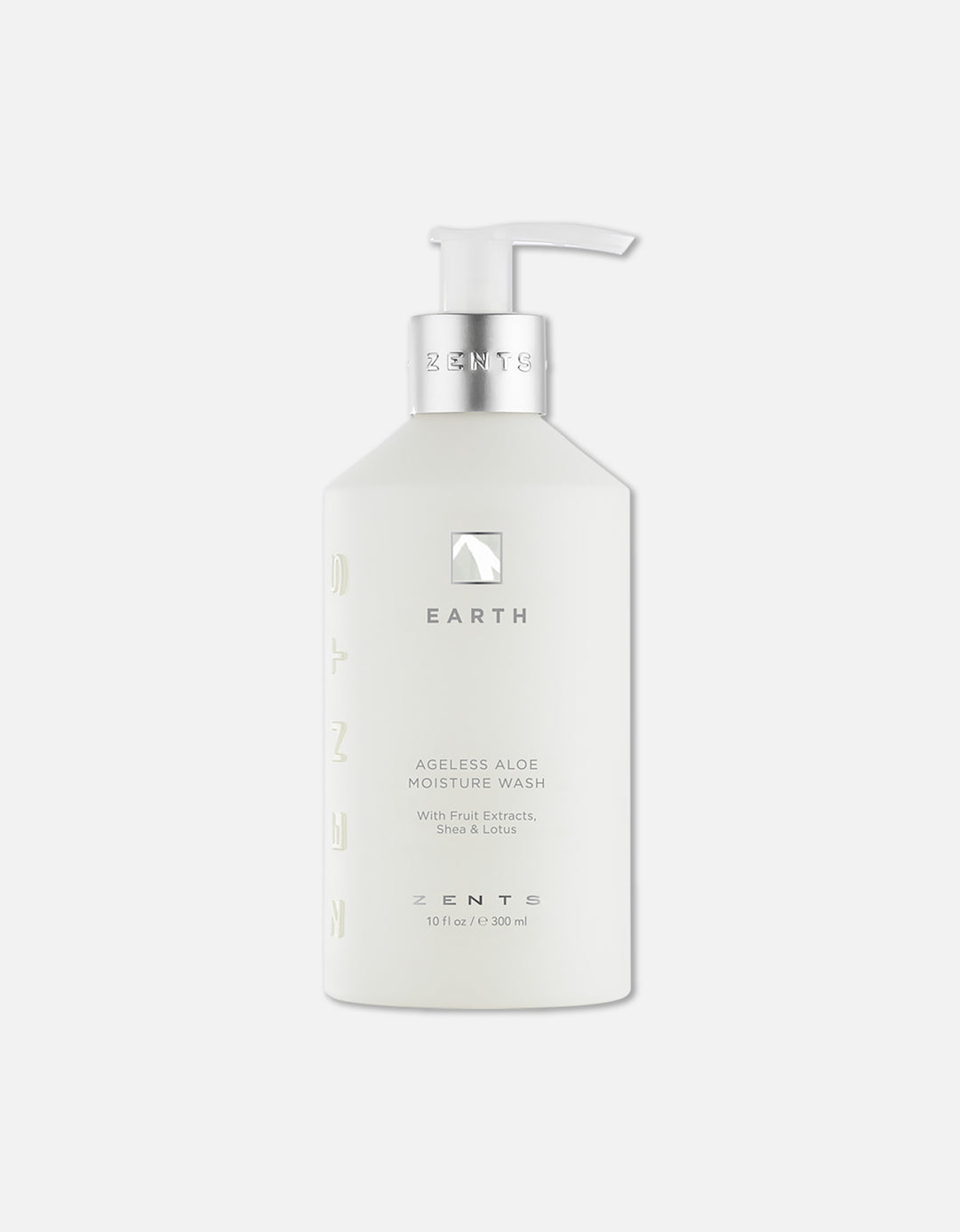
- Cleanse gently. A low-foaming, fragrance-considered wash like the Ageless Aloe Moisture Wash is what skin asks for here. Skip scrubs, washcloths, loofahs, anything that pulls at warm skin. This isn't the moment for exfoliation.
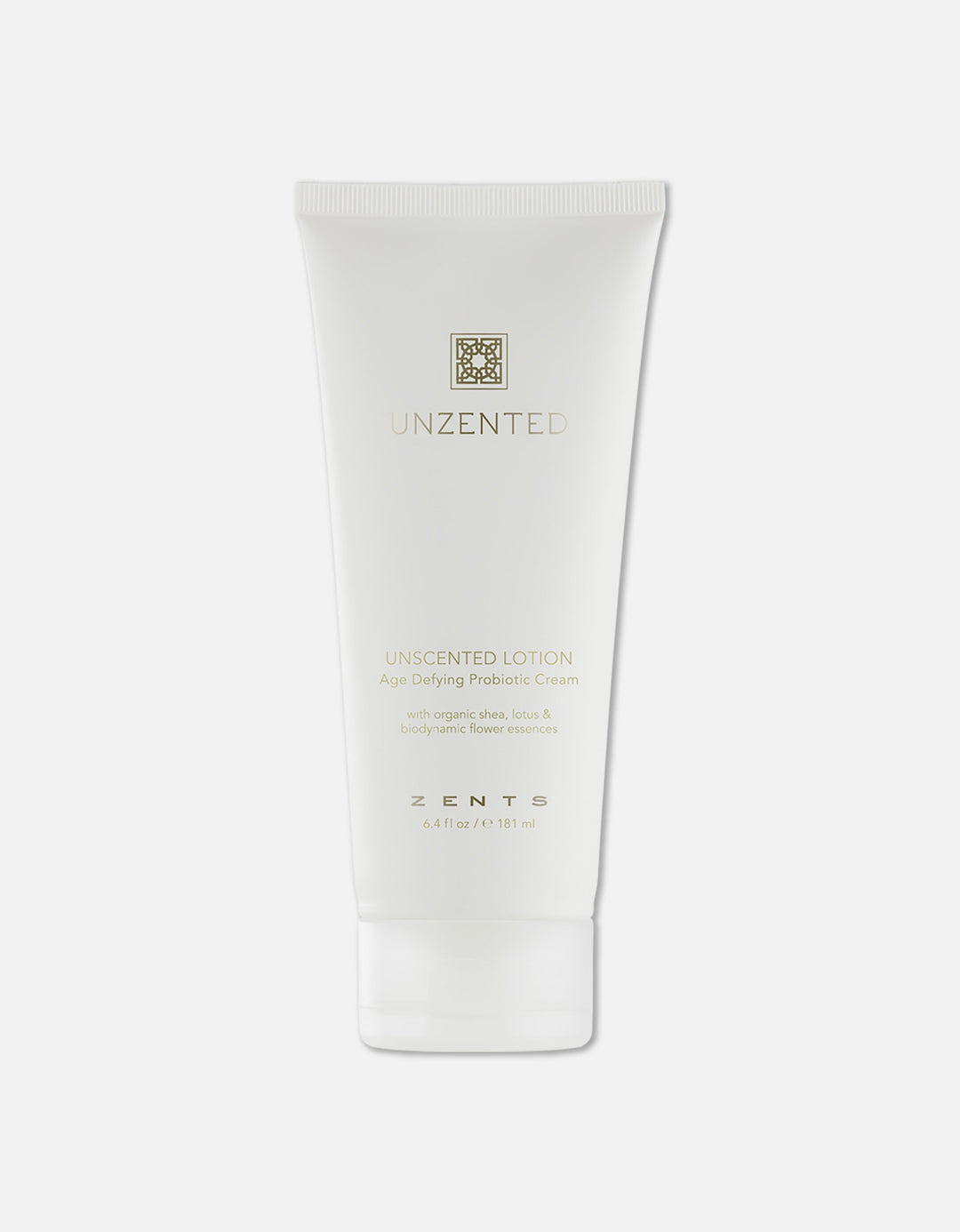
- Lotion to damp skin. Within five minutes of toweling off, smooth on a generous layer of the Age Defying Probiotic Lotion. The damp skin matters. The water on your skin gives the lotion something to bind to, drawing it inward rather than letting it evaporate.
- Seal with body oil. A finishing layer of the Luminous Cashmere Body Oil traps in the moisture you just delivered. Warm a few drops between your palms and press them onto skin in long, broad motions.
- Spot-treat the high-need zones. Shins. Tops of feet. Shoulders. Décolletage. Bridge of the nose if you didn't wear face SPF. These places lose moisture fastest. A small dab of the Concreta Reparative Balm stays put through the night. We love to use Unzented Concreta all over the face and neck post-sun to replenish and lock in moisture while your body resets.
- Drink water, more than you think. Sun dehydrates the whole body, not just the surface. Sixteen ounces in the first hour after coming inside is a reasonable start.
- Repeat the next day, more times than usual. The first 48 hours are the window where skin is doing the most work to return to itself. Reapply lotion two or three times across the day, not just morning and night. By day two, the tightness has eased.
On a quiet exposure day, a lunch outside or a half-hour walk in early summer, the first three steps are usually plenty. On a real beach day, do the whole ritual. On a day that ended in an actual sunburn, see the gentler, more conservative version in How to Recover from a Sunburn: A Skin-First Recovery Plan.
After-sun care vs. daily bodycare: what changes
The differences between after-sun care and your daily routine are real but soft. The same ingredients can show up in both categories. What shifts is the texture, the layering, the frequency, and what you set aside for a few days.
| Variable | Daily bodycare | After-sun care |
|---|---|---|
| Frequency | Once or twice a day | Two to four times a day for 48 to 72 hours |
| Texture | Lighter, faster-absorbing | Richer, more cushioned, gently occlusive |
| Key ingredients | Humectants, light emollients | Humectants plus barrier lipids, calming actives, probiotic peptides |
| What to set aside | Standard sensitivities | Retinoids, AHAs, BHAs, fragranced exfoliants for 48 to 72 hours |
| Timing | After bathing, before bed | Damp skin within 2 hours of sun, reapplied through the day |
| Layering | Usually one product | Lotion + body oil + a touch of balm on the zones that ask for more |
| Bathing temperature | Personal preference | Cool to lukewarm only, for 48 hours |
The pause-all-actives rule deserves a moment of its own. Retinoids and exfoliating acids speed up the surface turnover that's already happening from sun exposure. If they're part of your usual routine, set them aside for two or three days after a real day outside. Restart only when skin no longer feels warm, tight, or unusually sensitive.
Who after-sun care is for
Everyone. Quietly, gently, full stop. The idea that after-sun care is only for people who burn easily, or only for fair skin, has been around for a long time, and it isn't true. Every skin type loses moisture and feels the soft barrier shift that follows sun exposure, regardless of how visible redness is on the surface.
Some skin types do benefit even more, and notice the difference more quickly when after-sun care becomes part of summer:
- Skin that burns easily shows the warmth more visibly and appreciates the extra calming care. The visible response signals what's happening underneath.
- Deeper skin tones burn less visibly, but still experience the moisture loss and the soft barrier shift. Consistent care here is genuinely protective, especially against the uneven pigmentation that can follow inflammation. See Sun-Damaged Skin Over Time: Pigmentation, Texture, and Honest Recovery for more on that.
- Mature skin has a thinner, drier barrier as a baseline. Sun exposure pulls moisture out faster, and the return takes a little longer. The lotion-plus-oil pairing answers this well.
- Perimenopausal skin is moving through hormonal shifts that reduce natural sebum. Adding the ritual to summer is one of the kindest shifts you can make in this season of life.
- Sensitive or reactive skin is more likely to develop itching, dryness, or a soft rash after the sun. A consistent calming routine quiets the surface and reduces how often these flare up.
- Children's skin is thinner and asks for more. An evening lotion at the end of a beach day is one of the small acts of care that becomes the family ritual.
Common myths about after-sun care
Myth: If I didn't burn, I don't need it
Burning is the most visible signal of sun exposure, not the only one. Moisture loss, the soft barrier shift, the surface warmth, all of these happen at sun doses well below a burn. If skin feels tight, warm, or unusually dry on a sunny evening, that's the change you didn't see at the time.
Myth: Aloe gel is enough
Pure aloe is genuinely useful. The trouble is that most commercial aloe gels are mostly denatured alcohol, fragrance, and synthetic dye, with a small splash of aloe near the bottom of the ingredient list. The cool feeling those gels offer comes from the alcohol evaporating, not from any real hydration. The full honest breakdown is in Aloe Gel vs. Aloe Wash: The Honest After-Sun Aloe Guide.
Myth: My SPF protected me, so I'm fine
Even an SPF applied carefully lets some UV through. SPF 30 blocks roughly 97% of UVB, which means 3% reaches the skin, and that's assuming perfect application, no sweating, and a reapplication every two hours. Real-world SPF use lets considerably more through than people think. Heat-driven moisture loss happens regardless of SPF.
Myth: After-sun care is just marketing
Some of the category is marketing, especially anything sold as a tan extender with no real recovery ingredients in it but the underlying need is real. Skin is doing genuine work in the hours after sun exposure, and a thoughtful routine helps it along. The category exists because the moment exists. Some products meet it better than others.
Myth: Once is enough
The first 48 hours after the sun are when skin is most actively returning to itself. Reapplying lotion two or three times a day in that window is the single biggest factor in whether peeling, itching, or uneven pigmentation appears at all. One application is a beginning, not a complete answer.
The skin barrier, and why probiotic ingredients belong in this conversation
The skin barrier is having a long moment in skincare conversations, with good reason. Almost every dimension of skin comfort, hydration, sensitivity, reactivity, even the way tone looks under good light, traces back to barrier function. After-sun care is one of the moments where barrier support matters most.
Your skin barrier is more than the lipid matrix at the surface. It also includes the skin microbiome, the small community of microorganisms that lives on healthy skin and plays a quiet role in keeping it balanced. Peer-reviewed research suggests that supporting microbiome diversity, including with topical probiotic ingredients, measurably improves barrier function over time.
This is why Zents built the Age Defying Probiotic Lotion around probiotic peptides. The product wasn't formulated specifically as an after-sun lotion, but the same things that make it a considered daily product, the barrier support, the moisture delivery, the microbiome-friendly composition, make it especially well-suited for the post-sun window. For the deeper look at how probiotics support post-sun barrier repair, see How to Repair Your Skin Barrier After Sun Exposure.
When after-sun care matters most
Not every day calls for the full ritual. Here is a rough sense of how to calibrate, so the routine matches the moment.
- Beach day, pool day, all-day outdoor event. The full ritual that evening and the next morning. Reapply lotion three or four times for the next 48 hours.
- Long hike, gardening, sports practice in direct sun. The full ritual that evening, lotion and oil the next morning. Spot-treat any zones that feel tight.
- An hour or two outside, lunch or errands. Skip the cool compress, but apply lotion to damp skin after your evening shower. Drink a glass of water you would have skipped.
- Driving with sun through the window. UVA passes through standard glass and accumulates on the left arm and side of the face. A light evening lotion is worth the thirty seconds.
- Long flight. Cabin air is dry, and the UV at altitude near a window is higher than most people realize. Even a few hours in the air asks for a deliberate hydration step on landing.
- Snow, sand, water. Reflective surfaces double the exposure even when you're partially shaded. The under-jaw, the ears, the tops of feet, the places people forget.
Frequently Asked Questions
How soon after sun exposure should I apply after-sun care?
Within the first thirty minutes if you can. Two hours at the outside. The first hydrating layer of lotion is the highest-impact moment of the entire ritual, because moisture loss is most active in that window. If you can't get to a shower right away, even applying lotion to clean dry skin is genuinely better than waiting.
Can I use my regular body lotion as after-sun care?
In a pinch, yes. Anything is kinder than nothing. But the formulations are different, and the difference shows up by the next morning after a heavier day in the sun. A daily lotion is built for skin in its baseline state. After-sun formulations carry more barrier lipids, more calming ingredients, more of what recovery asks for. If you'd like one product to cover both moments, choose a richer lotion. The Age Defying Probiotic Lotion was made to do both.
Do I still need after-sun care if I wore sunscreen all day?
Yes. Sunscreen keeps most UV from reaching your skin, but no SPF is complete, and most of us apply less than the recommended amount or skip reapplication. Even with careful sunscreen use, the heat itself draws moisture out of the surface, and that's the part after-sun care meets.
How many days should I keep up the after-sun routine?
Two or three days for moderate exposure, four or five days after a heavy beach day or any visible burn. Let your skin's signals guide you. As soon as it stops feeling tight, warm, or unusually sensitive, you can ease back into your usual daily routine.
What's the difference between after-sun care and treating an actual sunburn?
After-sun care is the gentle, preventive ritual for any skin that spent time in the sun, including skin that hasn't visibly burned. A real sunburn asks for a more careful, conservative protocol, cooler bathing, gentler cleansing, attention to signs like blistering or chills that mean it's time to call a doctor. The complete sunburn recovery plan is in How to Recover from a Sunburn: A Skin-First Recovery Plan.
Will after-sun care help my tan last longer?
Yes, noticeably. A tan lives in the upper layers of the skin, which shed naturally over time as part of the normal turnover cycle. When skin is dry, that shedding looks flaky and the tan fades quickly. When skin is moisturized and sealed, the cycle slows down, and the color stays richer and more even for longer. For the dedicated routine, see How to Extend Your Tan: A Bodycare Routine That Actually Works.
After-sun care isn't a fix for something gone wrong. It's the small ritual that meets your skin where it is, in the hours when it's quietly working hardest. A few minutes of attention on the right evenings, and summer skin stays soft, supple, and unmistakably itself.